English
 Italian
 Spanish
 Thai
 Japanese
 Portuguese
 Korean
 Russian
 French
 German
 Polish
 Arabic
 Indonesian

For companies searching for a 2-Amino-2'-Chloro-5-Nitrobenzophenone intermediate supplier China, analytical quality control is a critical part of supplier qualification. A product description and a reported purity value cannot, by themselves, demonstrate that a chemical intermediate meets every requirement of a downstream process. Reliable assessment depends on correct chemical identification, suitable analytical methods, clearly defined impurity limits, and traceable batch-release documentation.
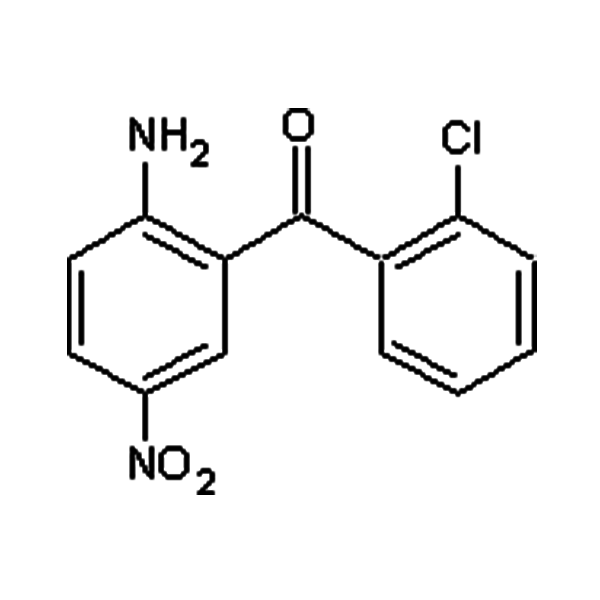
These factors become particularly important when an intermediate is used in multistep synthesis or when a manufacturing process has established limits for incoming materials. A structured analytical approach helps distinguish genuine product differences from variations caused by testing methods, sampling, or reporting conventions.
Establishing a Clear Analytical Specification
Before evaluating a supplier's analytical performance, the required material must be defined precisely. The chemical name 2-Amino-2'-Chloro-5-Nitrobenzophenone identifies a particular substituted benzophenone structure. Its identity should be confirmed using appropriate chemical identifiers and structural information rather than relying on the product name alone.
The product specification should distinguish identity, purity, assay, and other quality attributes. These terms describe different aspects of the material and should not be used interchangeably without a defined analytical basis.
Identity testing establishes whether the material corresponds to the intended compound. Purity testing evaluates the principal component and other detected components under a specified method. Assay measures content according to its defined calculation basis and analytical procedure. A supplier's reported result is meaningful only when the method and reporting convention are understood.
For this reason, buyers should establish the required analytical methods and acceptance criteria before ordering a sample. Where multiple suppliers are being evaluated, using a common specification prevents apparent price or quality differences from arising simply because the suppliers report results differently.
Using HPLC to Assess Purity and Related Impurities
High-performance liquid chromatography (HPLC) is commonly used to assess organic compounds and their related impurities when a suitable method has been developed. For a substituted aromatic intermediate such as 2-Amino-2'-Chloro-5-Nitrobenzophenone, chromatographic separation may help evaluate the principal component and reveal additional detectable components.
However, HPLC results depend on the method conditions, stationary phase, mobile phase, detector, sample preparation, and integration procedure. If relevant components are not adequately separated, the reported result may not accurately represent the impurity profile. Detector response can also differ among compounds, meaning that area percentage should not automatically be interpreted as mass percentage.
When reviewing a supplier's CoA, buyers should establish whether the reported purity is based on chromatographic area normalization, an assay method, or another defined measurement. The analytical method should be appropriate for the intended purpose, and any required individual impurity limits should be specified separately where justified.
A high HPLC area percentage can provide useful evidence, but it is not a substitute for confirming identity, evaluating relevant impurities, or reviewing the suitability of the method. The appropriate level of testing depends on the application and the risks associated with material variability.
Complementary Methods for Identity Confirmation
Different analytical techniques answer different questions. Infrared spectroscopy can provide information about characteristic functional groups, while nuclear magnetic resonance spectroscopy can support structural identification. Mass spectrometry may help confirm molecular mass or investigate selected impurities. Chromatographic methods can provide information about component separation and relative abundance.
These methods are complementary rather than interchangeable. A spectrum consistent with the expected compound does not necessarily establish that the sample meets a strict impurity specification. Similarly, a chromatographic peak with the expected retention behavior is not, by itself, definitive proof of chemical identity.
The analytical package should therefore be designed around the required level of assurance. For initial qualification, a customer may need identity confirmation and a more detailed review of the impurity profile than would be necessary for routine incoming checks after a supplier has demonstrated consistent performance.
The supplier should clarify which tests are performed for every batch, which are available on request, and which require an external laboratory. Any customer-specific testing should be agreed before production or shipment so that expectations are clear.
Understanding Impurity Profiles and Process Risk
不純物は、出発原料、不完全な変換、副反応、精製、または保管中の変化に由来する可能性があります。それらの関連性は、製造ルートと下流の化学反応によって異なります。検証されたプロセス情報がなければ、この化合物の特定の不純物パターンを仮定することは適切ではありません。
多段階プロセスで中間体を使用する顧客にとって、不純物が次の段階に持ち込まれたり、反応を妨げたり、最終精製を複雑にしたりすると、その不純物がさらに重要になる可能性があります。これが、総純度制限がプロセス管理にとって必ずしも十分であるとは限らない理由です。
適切な仕様には、プロセスの知識によってサポートされる場合、個々の不純物制限または追加の特性評価が含まれる場合があります。目標は、テストの数を最大化することではなく、適合性に重大な影響を与える品質特性を特定することです。
サプライヤーの最初の認定中に、裏付けとなるクロマトグラフィー データを確認すると、ベースラインを確立するのに役立ちます。解釈では、ピークの分離、統合、方法の制限、および同定された成分と未同定の成分の区別を考慮する必要があります。クロマトグラムだけでは、すべてのピークの同一性を証明することはできません。
適切な材料プロファイルが確立されると、後続のバッチを合意された仕様および関連する履歴データと比較できます。全体的な純度がまだ合格しているため、材料が許容できると自動的に仮定するのではなく、重大な違いがある場合は調査を開始する必要があります。
バッチリリースと分析トレーサビリティ
分析証明書は、特定のバッチを実行されたテストと報告された結果に結び付ける必要があります。製品を明確に識別し、リリースおよび出荷ドキュメント全体で一貫したバッチ識別子を使用する必要があります。
品質レビューでは、合否の記述のみに依存するのではなく、実際の結果を調査する必要があります。たとえば、複数のバッチにわたる結果を比較すると、各バッチが正式な許容限度内に留まっている場合でも、指定された不純物または別の重要な属性の変化が明らかになる場合があります。
サプライヤーと顧客が異なる分析結果を取得した場合、トレーサビリティが特に重要になります。調査では、サンプリングの代表性、サンプルの保管、準備手順、機器の状態、参照標準、および計算方法を考慮する必要があります。必要に応じて、両当事者は、資格のある独立した検査機関による確認検査について合意することができます。
仕様外の結果、苦情、および逸脱を処理するための文書化されたプロセスは、調査が系統的に行われ、是正措置が記録されることを保証するのに役立ちます。製造とテストが別の組織によって実行される場合、データのレビューとバッチリリースの承認の責任も明確にする必要があります。
製造管理と変更管理
分析の品質は製造プロセスの一貫性に依存します。原材料の管理、装置の状態、操作手順、精製、保管、および梱包は、完成した中間体の特性に影響を与える可能性があります。
江蘇京業製薬は 1994 年に設立され、2016 年に再編されました。同社は、高温高圧反応、水素化、キラル合成、高真空蒸留などの技術力を備え、研究開発、生産、国際貿易をカバーする総合的な医薬品事業を展開しています。これらの能力は、化学物質の製造経験を評価する際に関連する背景となりますが、2-アミノ-2'-クロロ-5-ニトロベンゾフェノンの特定の製造ルートと品質管理の取り決めについては、製品レベルでの確認が必要です。
サプライヤーは、変更がどのように評価され伝達されるかについても説明する必要があります。製造場所、出発原料源、製造ルート、または分析方法の変更は、比較可能性に影響を与える可能性があります。変更が合意された品質特性に影響を与える可能性がある場合、顧客は追加のテストまたは再認定が必要かどうかを評価するために十分な情報を受け取る必要があります。
保管とサンプルの取り扱い
分析結果は、サンプルが適切に処理された場合にのみ役立ちます。サンプル容器、保管条件、ラベル表示、および準備手順は、文書化された材料の取り扱い要件と一致している必要があります。制御されていない暴露または汚染により、発送時の材料と顧客がテストしたサンプルとの間に不一致が生じる可能性があります。
サプライヤーは、入手可能な製品情報に基づいて、適切な保管ガイダンスを提供する必要があります。購入者は、国際配送を手配する前に、梱包構成と関連する輸送上の注意事項も確認する必要があります。
初期評価中、サンプルのバッチ ID は付随する CoA と一致する必要があります。商用注文が別のバッチから生産される場合、サプライヤーは、承認された仕様に対して後のバッチがどのようにテストされ、リリースされるかを明確にする必要があります。
適格なサプライヤーの選択
中国の 2-アミノ-2'-クロロ-5-ニトロベンゾフェノン中間体サプライヤーを比較する場合、バイヤーは分析仕様、試験方法、バッチ記録、製造または流通モデル、品質に関する問い合わせへの対応を一緒に評価する必要があります。低い見積り値または高い純度が記載されていることは、製品の適合性の証拠に代わるものではありません。
Jiangsu Jingye Pharmaceutical は、最新の生産設備、高度な分析機器、完全な EHS システム、および ISO 9001、ISO 14001、GB/T 45001 などの管理認証を報告しています。関連する認証の範囲と現在の有効性を確認する必要があり、認定が完了する前に、この正確な化合物を製造または供給するサプライヤーの能力を検証する必要があります。
結論
Reliable analytical quality control requires a defined specification, appropriate identity and purity testing, meaningful impurity assessment, and traceable batch-release records. For a 2-Amino-2'-Chloro-5-Nitrobenzophenone intermediate supplier China, the most useful evidence is not a single purity figure but a consistent body of product-specific analytical data supported by effective manufacturing and change-control procedures.